
Understand refrigerator faults before choosing a technician.
Learn how to evaluate compressor diagnoses, refrigerant leak-testing recommendations, starter relay checks and written repair estimates before authorizing work.
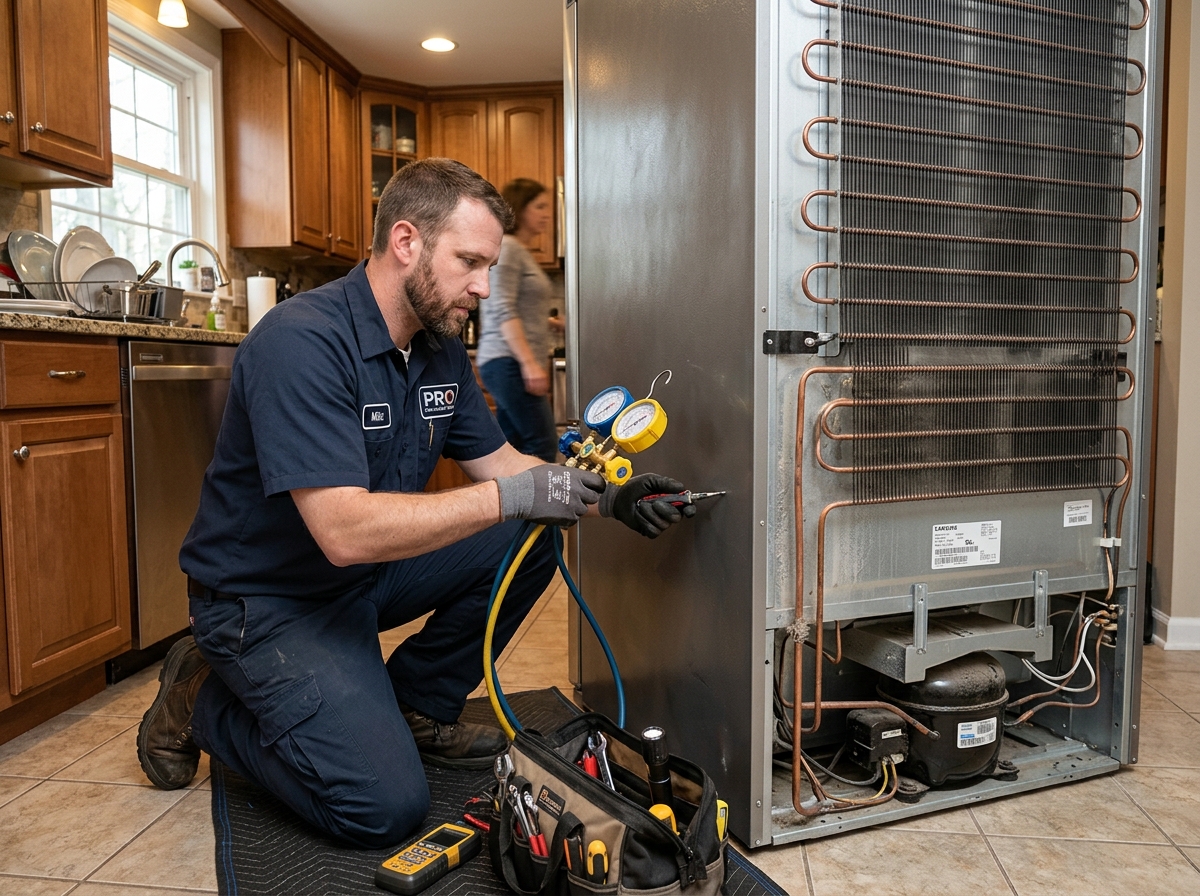
Compressor failure or a starter relay problem?
A clicking refrigerator does not automatically mean the compressor has failed. A technician should examine the starting circuit and the compressor before recommending a major replacement.
Clicking with little or no cooling
A faulty PTC starter relay or overload protector may cause repeated attempts to start. Ask which electrical checks were performed and what the results showed.
Winding or mechanical failure
Winding measurements and other appropriate diagnostic tests can help distinguish electrical problems from internal compressor faults. Request a clear explanation before accepting a replacement quote.
What to ask about refrigerant leak testing
A system that has lost refrigerant may require professional leak detection and repair, not simply a top-up. Sealed-system work should be performed by an appropriately qualified technician using methods suitable for the refrigerant.
Locate and assess the leak
Ask how the suspected leak will be confirmed. Appropriate professional testing may include dry nitrogen pressure testing under manufacturer procedures.
Discuss repair and filter-drier requirements
Ask which system components must be repaired or replaced, and whether the manufacturer recommends a new filter-drier when the sealed system is opened.
Check evacuation and correct charging
For systems requiring recharge, confirm that the technician follows the appliance rating plate and manufacturer specifications, including the appropriate refrigerant type and charge amount.
Three questions worth asking the technician
Use these questions when comparing local technicians. Ask for the inspection cost, scope of work and any warranty terms in writing.
“Does your refrigerant recharge estimate include identifying and repairing any leak?”
Clarify what testing is included, what additional work might cost, and whether the proposed repair addresses the cause of the refrigerant loss.
“What written warranty do you provide for sealed-system work and brazed joints?”
Compare warranty coverage, exclusions and duration. Ask for the applicable terms on the estimate or final invoice.
“Will you test the starter relay and overload protector before recommending a new compressor?”
A technician should be able to explain the diagnostic findings and why a particular component needs replacement.
What to verify before the job is closed
Cooling recovery can take time. Confirm the technician's tests, operating observations and documentation, then monitor temperatures according to the appliance instructions.
- 01Ask the technician to demonstrate that the refrigerator starts, runs and responds normally after the repair.
- 02Review any cooling performance measurements and ask when the refrigerator should return to its normal operating temperature.
- 03Check for unusual repeated clicking, vibrations or unexpected shutdowns and report concerns promptly.
- 04Request an itemized invoice describing the work, parts used, agreed charges and applicable written warranty.